
Purple Loosestrife Biocontrol Beetles in Mud Lake
For a second consecutive year, Friends of the Cedarburg Bog volunteers raised and released biocontrol beetles (Galerucella spp.) to help control the population of purple loosestrife in Mud Lake. When the beetles are well established, they can eat and damage purple loosestrife to the extent where flowering and seed production is eliminated.
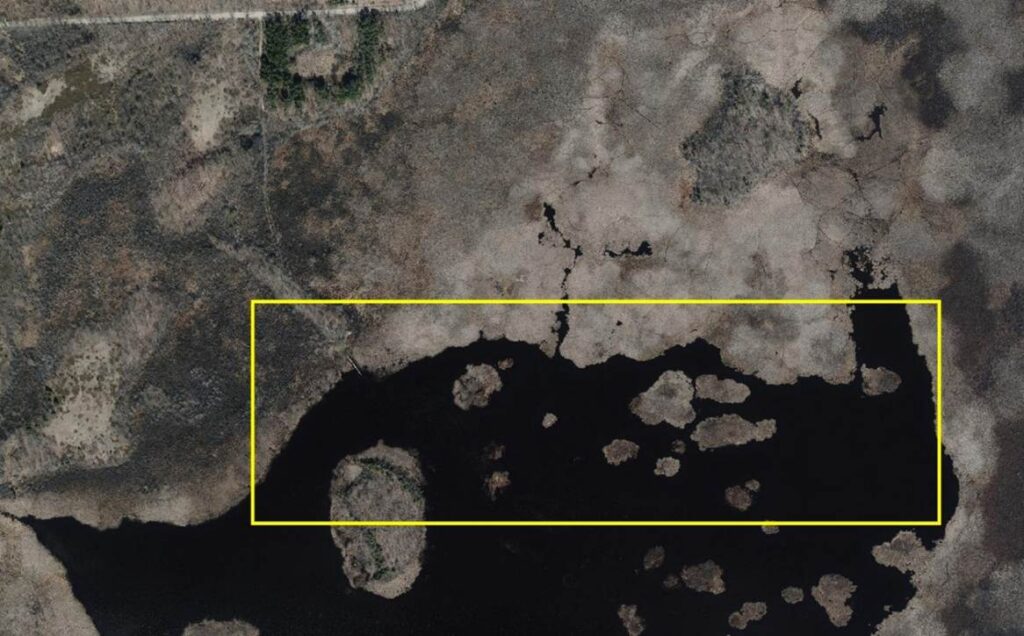
Area of shoreline and islands in Mud lake where purple loosestrife is abundant and where
beetles were released on August 14, 2026
In 2006 we raised eight “pots” of “Cella” beetles at the Field Station and released thousands of beetles into the loosestrife on the lake; in 2007 we raised and released another six “pots” of beetles. By 2010 the Galerucella beetle population in Mud Lake had increased in abundance to the point where flowering of loosestrife was entirely prevented. Purple loosestrife plants survived in the marshes but were so weakened by the beetles feeding on their leaves and shoots that no flowers were produced. Our biological control of purple loosestrife on the lake was wonderfully effective from 2010 to 2018; the Cella beetles were doing their job. In fact, from various releases, the beetles had spread and were thriving throughout our area, and it was hard to find a flowering plant of purple loosestrife. Even along the Milwaukee River, where loosestrife had been abundant, it took a keen eye to spot the weakened and beetle-ridden plants even late in the season.
Then came the crash. Something happened to the beetles between the end of 2018 and the start of the 2019 growing seasons. By August of 2019 it seemed that purple loosestrife was booming everywhere in our area, in roadside ditches, wetlands, the Milwaukee River, and Mud Lake. In 2021, we were still able to find a few plants in the Mud Lake marshes with Cella beetle damage, but flowering purple loosestrife was abundant, especially on those islands in the northern part of the lake where we first found loosestrife 30 years ago. The Cella beetle’s population had not recovered to an adequate abundance on their own.
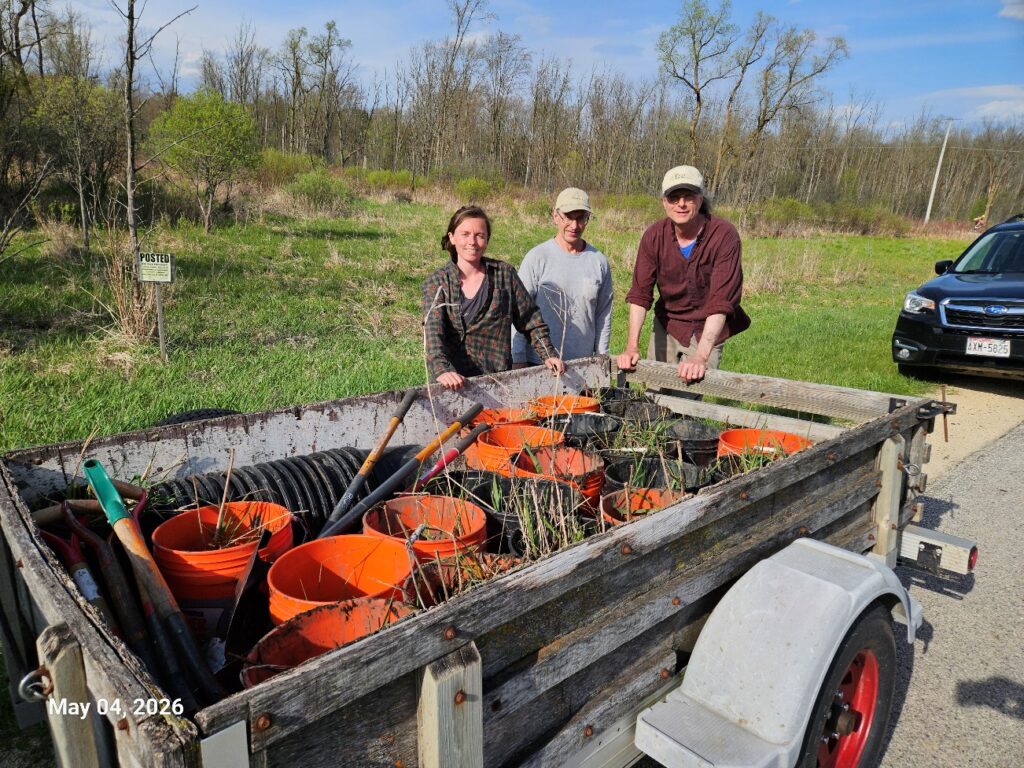
Volunteers collecting purple loosestrife on May 4, 2026 for rearing beetles at the Field Station.
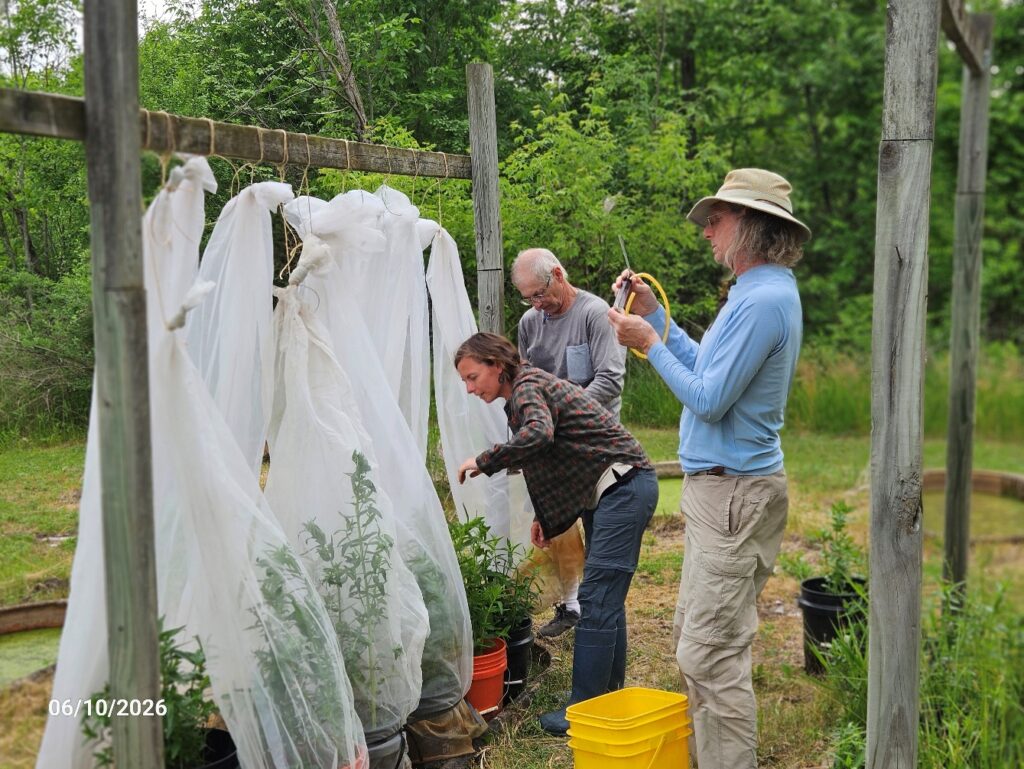
Placing beetles on the loosestrife and netting the plants at the Field Station on June 10, 2026.
Last year, in the 2025 season, volunteers raised and released beetles to Mud Lake. Unfortunately, that release did not seem to establish a large population and left relatively undamaged purple loosestrife blooming in abundance on Mud Lake this season. In fact, loosestrife was again blooming in wetlands throughout Ozaukee and Washington Counties. FOCB volunteers raised and released beetles again this season; we have not given up on trying to control purple loosestrife in Mud Lake and are hopeful that continuing releases will regrow the Galerucella population to a level that will provide effective control.
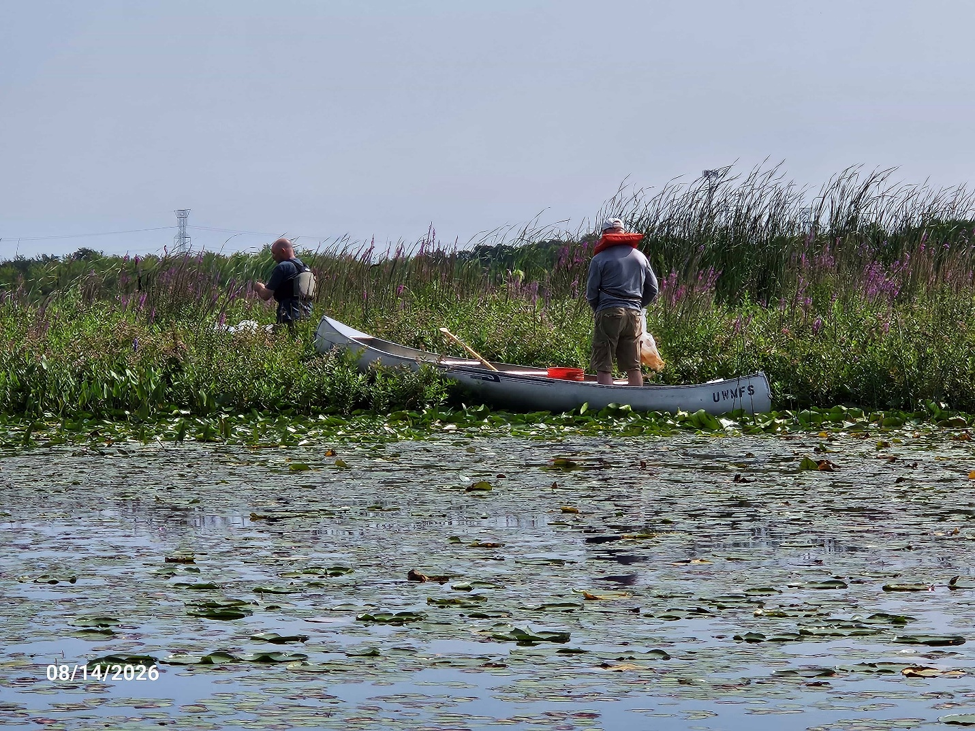
Releasing beetles into purple loosestrife on an island in Mud Lake
